Trust
Unreviewed AI changes lack structured evidence and a qualified human acceptance point.
TaskCycle helps your team scale coding agents across client projects with enforceable policy, verified changes, and qualified engineers making the final call.
✓ 601 tests passed
✓ Type check passed
◌ Security audit
✓ 184 components indexed
✓ SPDX inventory generated
The adoption gap
Your best engineers adopted agents on their own — results vary wildly. Someone asks “how do we know this AI-generated change is safe?” There’s no answer. Security blocks public assistants on client code. A pilot succeeds; the rollout never happens.
The bottleneck was never model quality — it’s the missing layer of control between individual experiments and organizational delivery.
Unreviewed AI changes lack structured evidence and a qualified human acceptance point.
Client code privacy risks and agent commands need enforceable boundaries.
Inconsistent team practices leave every developer driving agents differently.
No trace of agent work when terminal sessions lose context and audit history.
From prompt to proof
Engineers review the changed code, validation evidence, security findings, and proposed commit at the end of the cycle — rather than supervising every intermediate action.
Built by a practitioner, not a prompt vendor
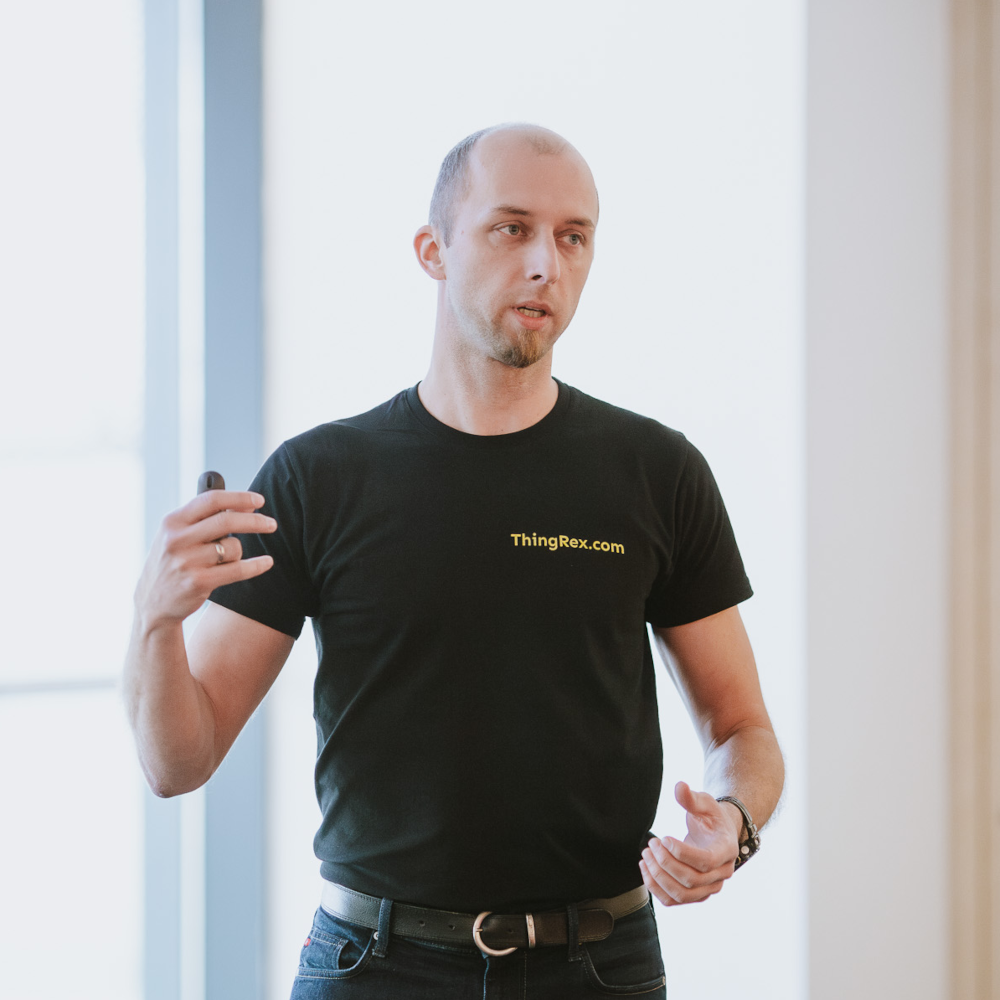
I'm Łukasz Malinowski. For nearly twenty years I've designed and governed delivery in environments where being wrong is expensive: as an IoT consultant at AWS advising global enterprises on critical infrastructure, and before that as a solutions architect and senior consultant in telecom and enterprise software. I also wrote “Internet of Things Using AWS Cloud” — a book about operating device fleets under real constraints, not demos.
Today, as a Fractional CTO and technical advisor, I work directly with software companies whose teams have adopted coding agents. The questions I get are never about model quality. They're: can you prove what the agent changed, will this pass our security review, and did any client code leave your infrastructure?
I couldn't answer them with existing tools — because I had the same problem in my own work. TaskCycle is the control layer I built for myself: agents that do the work, deterministic gates that verify it, and a qualified engineer who makes the final call. It routes each project to commercial AI providers or local models under policy — the same setup I develop on every day.
Why I built TaskCycle
In workshops with software-house owners and CTOs, I heard a recurring concern: developers were adopting AI tools, but teams needed a consistent way to uphold quality, security, and client-code privacy.
TaskCycle brings specialized agents, established validation tools, and model-routing controls into one structured workflow — so qualified engineers review the resulting code and evidence before accepting a change.
Product · a persistent multi-project control center
Run several development tasks from one durable local workspace — without switching between several terminal sessions.
Keep multiple project tabs and agent invocations moving at the same time.
Return to previous project-scoped conversations for review or continue the work.
Persist prompts, outputs, tool and reasoning events, audit results, and durations.
Choose the model and workflow configuration that fits each codebase.
Apply global safeguards, then add tighter project-specific rules where needed.
Coordinate several development tasks from a single local control plane.
Built. Tested. Evolving…
Designed for local, auditable development workflows.
Request a preview ↗Join the private preview
We are inviting teams that want more control, evidence, and accountability in agentic development. Tell us where TaskCycle could help.
Who it’s for / who it’s not for
European software consultancies and agencies with roughly 20–150 developers, already piloting coding agents but held back by client-code privacy, security, auditability, or inconsistent practice. If you’re an owner or CTO accountable for client IP, reputation, and senior review time, let’s talk. Internal engineering teams facing similar compliance pressure are welcome too.
Solo hobby projects, autocomplete seekers, teams without Git, tests, or qualified reviewers, or anyone looking for fully autonomous development without human acceptance.
Frequently asked questions
How TaskCycle approaches orchestration, governance, and delivery evidence.
TaskCycle is an agentic software delivery control plane. It coordinates coding agents around the specialized roles and controls used by effective enterprise software teams.
Other tools primarily optimize the interaction between a developer and a coding agent or attach best-effort skills to a general-purpose assistant. TaskCycle instead combines dedicated role-specific agents, persistent multi-project orchestration, pre-command policy, post-change security enforcement, and review-ready delivery evidence.
TaskCycle uses a two-layer governance model: control inside the loop and accountable review at the end of the cycle.
The AI Assessor goes beyond the usual “approve this command” sandbox with pre-execution policy for Bash commands, global and project-specific rules, command-chain parsing, independent LLM assessment, and a durable audit history.
The Security Gate provides post-development review by combining deterministic scanners, secret detection, validation commands, and an independent LLM auditor before the result reaches human review.
Yes. Models are selected per project and per agent role, so teams can mix local, privately hosted, and commercial models within the same workflow.
Development, command assessment, project summarization, and security review can each use an independently configured model. TaskCycle supports model discovery through OpenAI-compatible endpoints and Ollama.
The Security Gate returns an APPROVE, WARNING, or BLOCK verdict. Severe findings, exposed secrets, failed scanners, or broken validation can trigger hard blocking, independently of the AI auditor’s contextual judgment.
When configured, blocking findings are automatically returned to the AI Developer for targeted remediation. Reports, findings, and the final verdict remain stored for subsequent human review.
Yes. TaskCycle supports concurrent project tabs and agent invocations while keeping configuration, policies, and working context scoped to each project.
Every project can retain multiple restorable conversations, with prompts, outputs, tool events, audit results, and durations persisted across sessions without mixing project context.
TaskCycle is designed for teams that need controlled, repeatable, and auditable agentic development rather than an ungoverned coding assistant.
The original request came from a software-services company owner seeking to improve and standardize how developers build software with AI. Internal IT departments can apply the same approach to build business software through an enterprise-proven workflow.
No. Engineering leaders, product owners, security specialists, and internal IT teams can use TaskCycle to initiate and oversee governed development work.
Technical expertise remains important when reviewing code, evaluating risk, and making final delivery decisions, so those responsibilities should remain with appropriately qualified reviewers.
No. Its agents can execute much of the development cycle, but people remain responsible for reviewing the resulting code and evidence, providing targeted feedback, and making final acceptance and delivery decisions.
No. TaskCycle is an orchestration and governance layer that can run and combine existing tests, linters, validation commands, dependency audits, secret detection, and vulnerability scanners.
It complements established engineering controls by coordinating their results with agent activity, policy enforcement, delivery evidence, and accountable human review.
Include the tenant ID and a deduplication key so retries cannot publish duplicate cross-tenant events.
Send to AI Developer →